Why Do Some People Learn Languages So Easily?
Have you ever met someone who seems to pick up a new language effortlessly? They remember vocabulary after hearing it only once, imitate native pronunciation with remarkable accuracy, and become fluent in a surprisingly short time.
Meanwhile, others spend years studying the same language yet still struggle with speaking or remembering words.
Does this mean that some people are simply “born to learn languages”?
Modern research in neurolinguistics, psychology, and neuroscience suggests that the answer is both yes and no. While certain biological and cognitive factors can make language learning easier, success ultimately depends on a complex interaction between the brain, experience, motivation, and practice.
What Is Language Aptitude?
Language aptitude refers to a person’s natural ability to learn foreign languages efficiently.
It is important to understand that language aptitude is not the same as intelligence. A highly intelligent person may still find language learning challenging, while someone with average intelligence may excel at acquiring new languages.
Researchers generally describe language aptitude as a combination of several cognitive abilities, including:
- Working memory
- Pattern recognition
- Phonological processing
- Grammatical sensitivity
- Learning strategies
- Cognitive flexibility
Together, these abilities influence how quickly and effectively someone can learn a new language.
The Power of Working Memory
One of the strongest predictors of language-learning success is working memory.
Working memory is the brain’s ability to temporarily store and manipulate information while performing a task.
Imagine hearing a sentence in a language you are learning. Your brain must:
- Hold unfamiliar words in memory.
- Analyze grammatical structure.
- Connect meanings.
- Build an appropriate response.
All of this happens within seconds.
People with stronger working memory often find it easier to understand complex sentences, learn grammar, and remember new vocabulary.
Your Brain’s Ability to Recognize Patterns
Languages are built on patterns.
Every language contains regularities in pronunciation, grammar, word order, and sentence structure.
Some people are naturally better at detecting these hidden patterns.
This ability, often called statistical learning, allows learners to discover grammatical rules without consciously memorizing every detail.
Children rely heavily on statistical learning when acquiring their first language, but adults continue to use this remarkable ability throughout life.
Hearing Sounds Others Can’t Hear
Another important factor is phonological awareness—the ability to recognize and distinguish subtle speech sounds.
For example, English learners often need to distinguish sounds such as /ɪ/ and /iː/ (ship vs. sheep), while Japanese learners of English may struggle with the difference between /l/ and /r/.
Individuals with stronger auditory discrimination generally develop more accurate pronunciation and better listening comprehension.
Their brains process speech sounds more efficiently, making language learning faster and more natural.
Neuroplasticity: The Brain That Learns
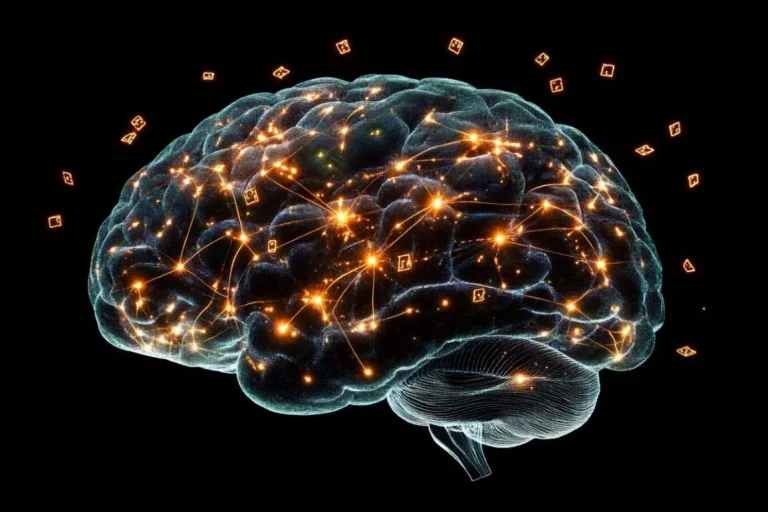
Perhaps the most fascinating feature of the human brain is neuroplasticity—its ability to reorganize itself through learning and experience.
Whenever you learn a new word, practice pronunciation, or master a grammatical rule, your brain strengthens existing neural connections and forms new ones.
Brain imaging studies have shown that learning a second language can produce measurable changes in both the structure and function of the brain.
In other words, every language you learn literally reshapes your brain.
Does Genetics Matter?
Scientists have long investigated whether genes influence language learning.
Current evidence suggests that genetics may affect certain abilities related to language acquisition, including:
- Memory capacity
- Auditory processing
- Processing speed
- Attention control
However, no single “language gene” determines whether someone will become multilingual.
Instead, genes provide a starting point, while education, practice, motivation, and environment shape the final outcome.
Motivation May Be More Important Than Talent
Surprisingly, one of the strongest predictors of long-term language success is not natural ability—it is motivation.
Learners who are genuinely interested in the language often:
- Practice consistently.
- Seek opportunities to communicate.
- Accept mistakes as part of learning.
- Maintain their efforts over long periods.
These habits gradually strengthen the brain’s language networks through repeated activation.
Many researchers believe that consistent practice can compensate for differences in natural aptitude.
Can Adults Become Successful Language Learners?
A common myth is that only children can become fluent in another language.
While children often acquire native-like pronunciation more easily, adults possess several important advantages.
Adult learners benefit from:
- Better problem-solving skills
- More developed learning strategies
- Greater metalinguistic awareness
- Richer world knowledge
- Stronger self-directed learning abilities
Thanks to neuroplasticity, the adult brain remains capable of learning new languages throughout life.
Although the learning process may differ from childhood, success is entirely possible at any age.
Can Language Aptitude Be Improved?
The encouraging news is that many of the cognitive skills involved in language learning can be strengthened.
Research suggests that learners can improve their performance by:
- Reading regularly
- Listening to authentic speech every day
- Speaking as often as possible
- Reviewing vocabulary using spaced repetition
- Engaging in meaningful conversations
- Challenging themselves with increasingly complex language
These activities repeatedly activate language-related neural networks, making them stronger and more efficient over time.
In other words, aptitude is not fixed—it can develop through experience.
What Neuroscience Teaches Us About Language Learning
The brain is not designed to stop learning after childhood.
Instead, it remains adaptable throughout life, continuously modifying its neural circuits in response to experience.
Language learning is one of the clearest demonstrations of this remarkable flexibility. Every new word learned, every conversation held, and every grammatical structure mastered strengthens the brain’s ability to process language.
Success is therefore not determined by talent alone, but by the interaction between biology, environment, and sustained practice.
Conclusion
Some people may begin their language-learning journey with cognitive advantages such as stronger working memory, better auditory perception, or greater pattern-recognition abilities. These factors can make learning easier, but they do not determine the final outcome.
Modern neuroscience shows that the human brain is capable of remarkable growth throughout life. Motivation, consistent practice, meaningful exposure, and effective learning strategies can gradually reshape the brain and improve language abilities regardless of age.
Perhaps the most important lesson is this:
Great language learners are not always born—they are built through curiosity, persistence, and the extraordinary adaptability of the human brain.