Artificial Intelligence Was Inspired by the Brain—But Is It Really Similar?
Artificial intelligence (AI) has transformed the way we work, communicate, and learn. Modern AI systems can translate languages, recognize faces, write essays, generate images, and even engage in conversations that resemble human interaction.
These remarkable abilities often raise an important question:
Do artificial intelligence systems learn the same way the human brain does?
The short answer is no. While AI was inspired by neuroscience, today’s artificial intelligence operates very differently from the biological brain. Understanding these similarities and differences helps us appreciate both the power of AI and the extraordinary complexity of the human mind.
Why Are They Called “Neural Networks”?
Many modern AI systems rely on artificial neural networks (ANNs).
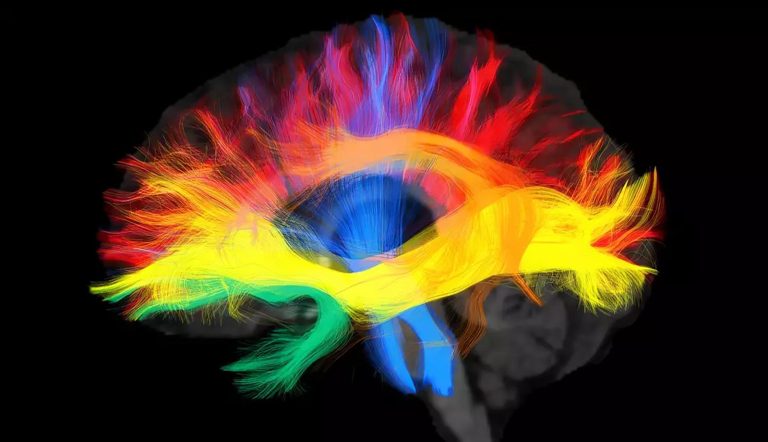
The name comes from biology. Scientists designed these computational models after observing that the human brain consists of billions of interconnected neurons communicating through electrical and chemical signals.
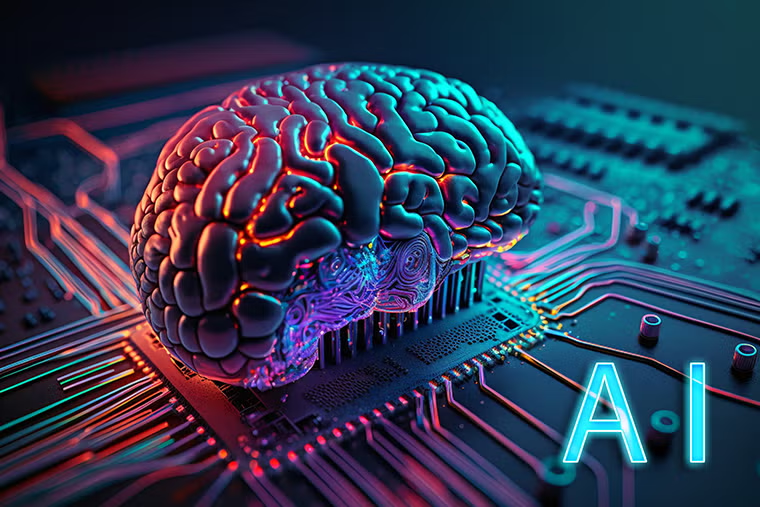
Artificial neural networks imitate this idea using mathematical “neurons” connected in multiple layers. Each artificial neuron receives information, performs simple calculations, and passes the result to the next layer.
Although the inspiration comes from biology, these artificial neurons are only simplified mathematical models—not real brain cells.
How Does the Human Brain Learn?
The human brain learns through experience.
Whenever we encounter new information, practice a skill, or solve a problem, connections between neurons change. Some become stronger, others weaken, and entirely new pathways may form.
This remarkable ability is known as neuroplasticity.
Learning in the brain depends on numerous biological processes, including:
- Electrical signaling
- Chemical neurotransmitters
- Synaptic plasticity
- Attention
- Emotion
- Sleep
- Memory consolidation
Every experience can reshape the brain’s neural circuits.
How Does Artificial Intelligence Learn?
AI systems learn in a completely different way.
Instead of biological neurons, AI adjusts millions—or even billions—of numerical parameters called weights.
During training, an AI model processes enormous amounts of data. After making predictions, it measures its errors and gradually adjusts these weights to improve future performance.
This optimization process is repeated millions of times until the model becomes highly accurate for a specific task.
Unlike the brain, AI does not understand information in a human sense. It identifies statistical patterns in data rather than developing conscious knowledge.
Similarities Between AI and the Human Brain
Despite their differences, AI and the brain share several interesting characteristics.
Learning From Experience
Both improve through repeated exposure.
Children become better readers by reading.
AI becomes better at image recognition by analyzing millions of images.
Pattern Recognition
Both systems excel at recognizing patterns.
Humans identify familiar faces, understand speech, and recognize emotions.
AI detects objects in photographs, translates languages, and predicts text based on learned patterns.
Network-Based Processing
Neither relies on a single central processor.
Instead, both distribute information across interconnected networks, allowing complex tasks to emerge from many simple interactions.
The Biggest Differences
Although AI is inspired by the brain, the differences are far greater than the similarities.
The Brain Learns Efficiently
A child can often learn a new concept after only a few examples.
Most AI systems require thousands—or even millions—of training examples to achieve comparable performance.
Human learning is dramatically more data-efficient.
The Brain Uses Very Little Energy
The human brain consumes approximately 20 watts of power—roughly the same as a household light bulb.
Training a large AI model may require thousands of powerful graphics processors and enormous amounts of electricity.
This makes the biological brain one of the most energy-efficient information-processing systems known.
The Brain Understands Context
Humans naturally interpret meaning using context, emotions, prior experiences, and common sense.
AI often struggles with situations it has never encountered because it lacks genuine understanding and lived experience.
Humans Learn Continuously
People learn throughout life without completely forgetting previous knowledge.
AI systems often require retraining when new information becomes available and may suffer from catastrophic forgetting, where learning new tasks interferes with previously acquired knowledge.
Can AI Think Like Humans?
This remains one of the biggest questions in artificial intelligence research.
Today’s AI can generate impressive text, recognize speech, solve mathematical problems, and assist scientific discovery.
However, current AI does not possess:
- Consciousness
- Self-awareness
- Emotions
- Personal experiences
- Genuine understanding of meaning
Instead, it predicts likely outputs based on patterns learned from data.
Whether future AI systems will ever achieve human-like cognition remains an open scientific question.
What Can Neuroscience Teach AI?
The relationship between neuroscience and artificial intelligence works in both directions.
Originally, neuroscience inspired artificial neural networks.
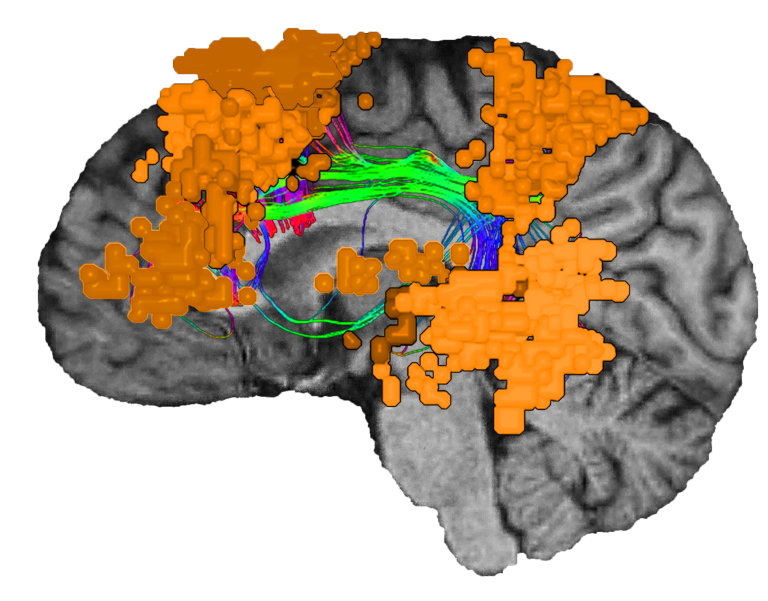
Today, AI is helping neuroscientists analyze massive datasets, decode brain activity, identify neurological diseases, and better understand how the brain functions.
Many researchers believe that future breakthroughs in AI may come from a deeper understanding of biological intelligence.
Likewise, advances in AI may reveal new insights into how the human brain learns, remembers, and processes language.
The Future: Brain-Inspired Intelligence
A growing field known as neuromorphic computing aims to build computer systems that more closely resemble the structure and function of biological brains.
Rather than simply increasing computing power, researchers are designing hardware that mimics neural communication, making future AI systems more adaptive, energy-efficient, and flexible.
Although these technologies are still developing, they represent an exciting intersection of neuroscience, computer science, and cognitive psychology.
Conclusion
Artificial intelligence and the human brain share a common inspiration, but they operate according to fundamentally different principles.
AI excels at processing enormous amounts of data and identifying statistical patterns, while the human brain combines perception, memory, reasoning, emotion, and experience into an extraordinarily flexible system capable of lifelong learning.
Rather than viewing AI as a replacement for the human brain, neuroscience suggests a more inspiring perspective: each helps us better understand the other. As these two fields continue to evolve together, they may unlock new discoveries about intelligence itself—both artificial and biological.