Is It Really Possible to Read Someone’s Thoughts?
Imagine a future where doctors can understand the thoughts of patients who are unable to speak, where people with paralysis can communicate simply by thinking, or where computers can translate brain activity directly into words.
It sounds like science fiction—but thanks to advances in neuroscience and artificial intelligence, this future is becoming increasingly realistic.
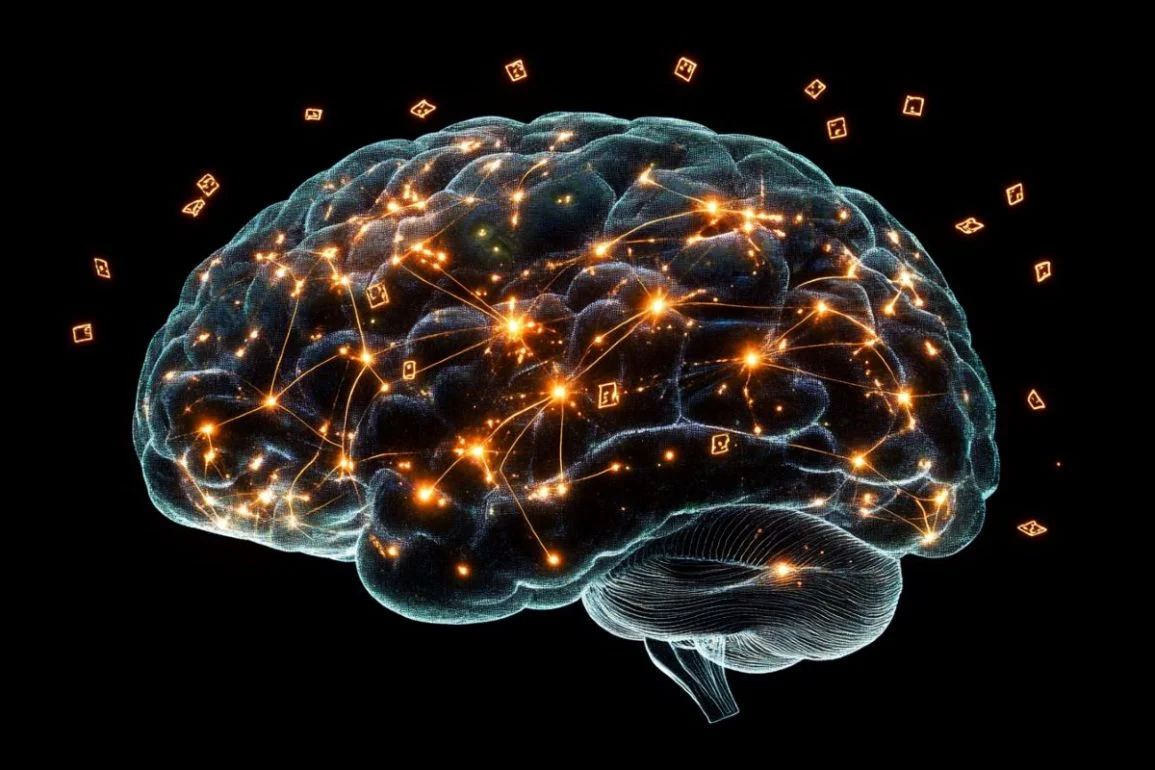
Although scientists cannot literally “read minds,” they have made remarkable progress in a field known as brain decoding. By analyzing patterns of brain activity, researchers can predict what a person is seeing, hearing, imagining, or even intending to say.
But how close are we to true mind reading?
What Is Brain Decoding?
Brain decoding is the process of interpreting brain activity to infer a person’s mental state.
Instead of reading thoughts directly, researchers analyze patterns of neural activity and use computational models to predict what those patterns represent.
For example, scientists may train an artificial intelligence system to recognize the brain activity associated with different images, words, or movements. Once trained, the system can estimate what a person is experiencing simply by analyzing new brain signals.
The goal is not to access private thoughts, but to understand how the brain represents information.
How Do Scientists Measure Brain Activity?
Brain decoding depends on technologies that can record or visualize brain activity.
Each method provides different types of information.
Electroencephalography (EEG)
EEG measures the brain’s electrical activity using electrodes placed on the scalp.
Its greatest advantage is excellent temporal resolution—it can detect changes in brain activity within milliseconds.
Because of this speed, EEG is widely used to study language processing, attention, decision-making, and brain-computer interfaces.
However, EEG provides relatively poor spatial resolution, making it difficult to determine the exact location of neural activity.
Functional Magnetic Resonance Imaging (fMRI)
Unlike EEG, functional magnetic resonance imaging (fMRI) measures changes in blood oxygen levels that occur when different brain regions become active.
Its greatest strength is high spatial resolution, allowing researchers to identify which brain areas are involved in specific cognitive tasks.
The drawback is that fMRI measures brain activity more slowly than EEG because blood-flow changes occur several seconds after neurons become active.
Artificial Intelligence Meets Neuroscience
Brain decoding has advanced rapidly because of modern machine learning.
AI algorithms can analyze enormous amounts of brain data and identify patterns that would be impossible for humans to detect manually.
Researchers train these algorithms using thousands of brain scans collected while participants:
- Look at images
- Listen to speech
- Read words
- Watch movies
- Imagine objects
- Plan movements
After training, AI can often predict what category of stimulus a person is experiencing based solely on brain activity.
Can Scientists Reconstruct What Someone Sees?
One of the most exciting achievements in brain decoding has been the reconstruction of visual experiences.
In several recent studies, researchers combined fMRI data with advanced AI models capable of generating images.
Participants viewed photographs while their brain activity was recorded.
Using only the recorded brain signals, AI generated images that closely resembled what participants had seen.
Although these reconstructions are not perfect photographs, they demonstrate that visual information can be partially recovered from patterns of brain activity.
Can Brain Activity Be Turned Into Speech?
Researchers are also developing systems that convert neural activity into spoken or written language.
This technology could dramatically improve communication for people with conditions such as:
- Amyotrophic lateral sclerosis (ALS)
- Stroke
- Locked-in syndrome
- Severe paralysis
By recording activity from speech-related brain regions, AI systems can predict the words a person intends to say—even when they cannot physically speak.
Recent advances have significantly improved both the speed and accuracy of these systems, offering new hope for patients with communication disorders.
What Are Brain-Computer Interfaces?
Brain decoding forms the foundation of brain-computer interfaces (BCIs).
A BCI creates a direct communication pathway between the brain and an external device.
Using only their thoughts, individuals may be able to:
- Move a computer cursor
- Type text
- Control robotic arms
- Operate wheelchairs
- Communicate with caregivers
Although today’s BCIs remain limited, rapid technological progress suggests they will become increasingly practical in the coming years.
Can Scientists Read Your Private Thoughts?
This is one of the most common—and understandable—questions.
The answer is no.
Current brain-decoding technology cannot access private thoughts at will.
Modern decoding systems require:
- Sophisticated brain-imaging equipment
- Controlled laboratory conditions
- Extensive training data
- Advanced AI models
Even then, researchers can usually decode only specific categories of information that participants were instructed to think about during carefully designed experiments.
Your spontaneous memories, personal opinions, and inner thoughts remain inaccessible to current technology.
Ethical Challenges
As brain-decoding technology advances, important ethical questions arise.
Researchers and policymakers are increasingly discussing issues such as:
- Mental privacy
- Data security
- Informed consent
- Ownership of brain data
- Potential misuse of neurotechnology
Some experts have even proposed recognizing cognitive liberty and mental privacy as fundamental human rights to ensure that advances in neurotechnology are used responsibly.
The Future of Brain Decoding
The future of brain decoding is incredibly promising.
Scientists hope to develop technologies that can:
- Restore communication after paralysis
- Improve treatment for neurological disorders
- Enhance brain-computer interfaces
- Better understand language processing
- Reveal how memories and thoughts are represented in the brain
As neuroscience and artificial intelligence continue to evolve together, the boundary between thought and communication may become increasingly seamless.
Conclusion
Brain decoding is one of the most exciting frontiers in modern neuroscience. By combining advanced brain-imaging technologies with powerful artificial intelligence, researchers are beginning to translate patterns of neural activity into meaningful information.
While true “mind reading” remains beyond today’s scientific capabilities, brain decoding has already demonstrated extraordinary potential. From helping people who have lost the ability to speak to deepening our understanding of how thoughts are represented in the brain, this field is transforming both neuroscience and medicine.
Perhaps the greatest lesson is not that scientists can read minds—but that every discovery brings us closer to understanding one of the most complex systems in the known universe: the human brain.