Can You Really Forget a Language?
Many of us have experienced this situation: after years of not using a foreign language, we struggle to remember words that once came naturally. We hesitate during conversations, forget basic vocabulary, or suddenly realize that speaking has become much more difficult than it used to be.
But have we truly forgotten the language?
According to research in neurolinguistics and cognitive neuroscience, the answer is usually no. In most cases, the language is not erased from the brain—it simply becomes more difficult to access.
What Is Language Attrition?
The gradual loss of language proficiency is known as language attrition. It refers to the decline in a person’s ability to use a language that they had previously learned.
Language attrition can affect several aspects of language, including:
- Vocabulary retrieval
- Grammar
- Pronunciation
- Listening comprehension
- Speaking fluency
This process may occur in a second language after years of disuse, but it can also affect a person’s native language under certain circumstances, such as long-term immigration or limited exposure.
How Does the Brain Store a Language?
Learning a language changes the brain.
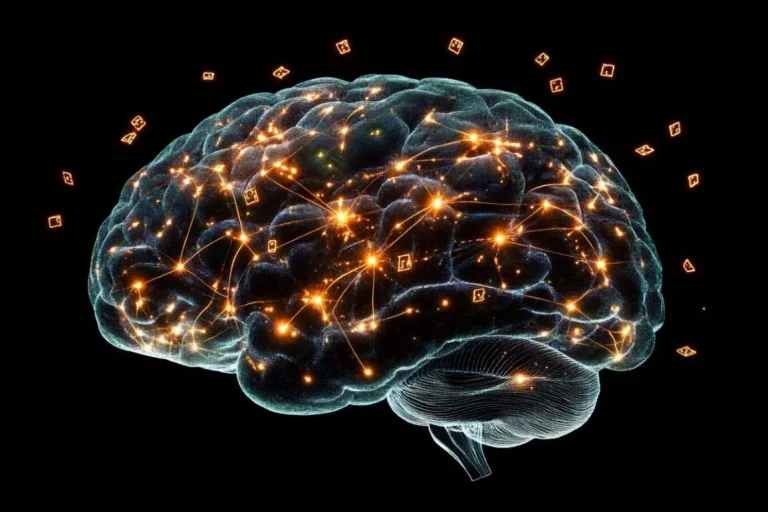
Every new word, grammatical rule, and pronunciation pattern strengthens networks of neurons that work together to process language. Through repeated use, these neural pathways become more efficient, making it easier to understand and produce speech.
A useful analogy is to imagine walking through a forest. The more often you use a particular path, the clearer and easier it becomes to follow.
The brain works in much the same way.
What Happens When You Stop Using a Language?
When a language is rarely used, its neural pathways receive less activation.
Over time, these connections become less efficient—not because the information disappears, but because the brain no longer retrieves it as quickly as before.
This explains why many people say:
“I know the word… I just can’t remember it right now.”
The problem is often one of retrieval, not storage.
The knowledge is still present, but accessing it requires more effort.
Which Parts of a Language Are Forgotten First?
Not all aspects of language fade at the same rate.
Research suggests that people tend to lose:
- Low-frequency vocabulary
- Specialized terminology
- Complex grammatical structures
- Speaking fluency
In contrast, frequently used words and basic grammatical patterns are generally much more resistant to forgetting.
Why Is Your First Language More Resistant?
Our first language is usually acquired during early childhood, a period when the brain is exceptionally plastic.
It becomes deeply connected with emotions, memories, social interactions, and everyday experiences. As a result, the neural networks supporting the native language are often stronger and more stable than those supporting later-learned languages.
However, even a first language can undergo attrition if it is rarely used for many years.
Does Learning a New Language Cause You to Forget Another One?
Many multilingual speakers notice that words from different languages sometimes compete with each other.
For example, while speaking English, a Spanish word might suddenly come to mind first.
This phenomenon does not necessarily mean that one language is being forgotten. Instead, it reflects the brain’s challenge of managing multiple active language systems at the same time.
In fact, neuroscientists have shown that bilingual and multilingual brains often activate more than one language simultaneously, even when only one is being spoken.
Can a Forgotten Language Come Back?
The encouraging news is that, in many cases, the answer is yes.
People who once spoke a language fluently often relearn it much faster than complete beginners. This phenomenon, sometimes called language savings, suggests that the original neural representations remain in the brain even after years of disuse.
With regular exposure and practice, these dormant pathways can become active again.
Many learners are surprised by how quickly forgotten vocabulary and grammar begin to return.
How Can You Prevent Language Attrition?
The best way to maintain a language is through consistent exposure.
You do not need hours of daily study. Even short but regular contact with the language can help preserve neural connections.
Effective strategies include:
- Reading books or articles
- Listening to podcasts
- Watching movies or documentaries
- Speaking with native speakers
- Writing a daily journal
- Reviewing vocabulary regularly
Consistency is far more important than intensity.
What Can Language Attrition Teach Us About the Brain?
Language attrition demonstrates one of the brain’s most fascinating characteristics: it is constantly adapting.
Neural connections strengthen through use and weaken through neglect. This principle applies not only to language but also to many other cognitive skills, including music, mathematics, and motor learning.
Rather than viewing forgetting as failure, neuroscientists often see it as evidence of the brain’s remarkable efficiency. The brain continuously reorganizes itself based on the information and skills we use most frequently.
Conclusion
Forgetting a language rarely means that it has been erased from the brain. More often, it reflects reduced access to neural networks that have not been activated for a long time.
The good news is that these networks often remain intact beneath the surface. With renewed exposure, practice, and repetition, the brain can reactivate them, making forgotten words and structures surprisingly easy to recover.
Language attrition reminds us that the brain is not a static storage system but a living, dynamic network that constantly changes with experience. Every conversation, every book, and every new word helps keep these neural pathways alive—and every return to a forgotten language proves just how adaptable the human brain truly is.