How Can You Recognize a Face in Less Than a Second?
Imagine walking through a crowded street.
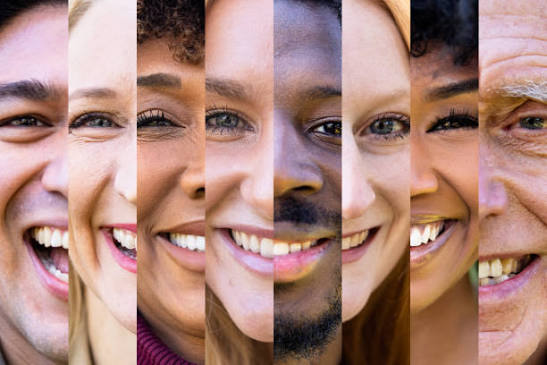
Hundreds of faces pass by, yet you can instantly recognize a friend from across the crowd. You may even recognize someone you haven’t seen in years, despite changes in their hairstyle, age, or appearance.
Your brain performs this remarkable task almost automatically.
Facial recognition is one of the most sophisticated visual abilities of the human brain. It allows us to identify people, interpret emotions, remember social interactions, and navigate complex relationships.
But how does the brain actually recognize a face?
Why Are Faces So Important to the Brain?
Humans are highly social animals.
From infancy, we pay special attention to faces. Newborn babies show a preference for face-like patterns, and throughout childhood, the brain becomes increasingly specialized at detecting and interpreting facial information.
Recognizing a face is not simply about identifying two eyes, a nose, and a mouth.
The brain must analyze the overall configuration of facial features and compare it with stored representations of people we already know.
This process happens remarkably quickly.
The Journey From the Eyes to the Brain
Facial recognition begins when light reflected from a person’s face enters your eyes.
The visual information is transmitted through the retina and then travels through several stages of the visual system.
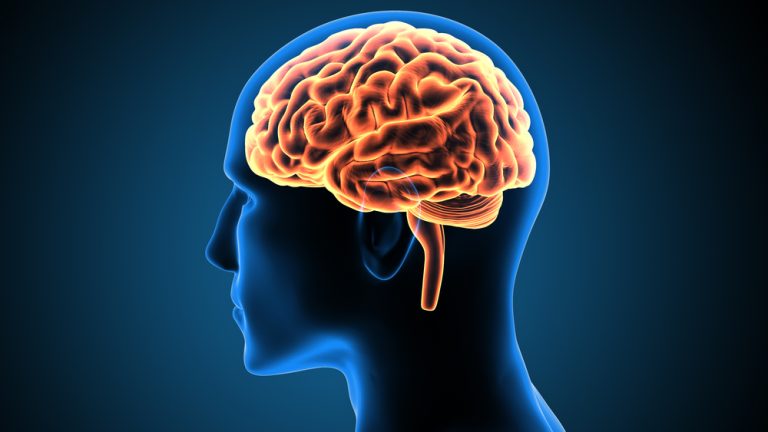
Eventually, information reaches regions of the occipital and temporal lobes, where increasingly complex aspects of the face are processed.
The brain analyzes characteristics such as:
- Shape
- Size
- Distance between features
- Skin texture
- Hair
- Facial expressions
- Head orientation
These signals are combined into a coherent representation of the person.
The Fusiform Face Area
One of the most famous regions associated with facial recognition is the Fusiform Face Area (FFA).
The FFA is located in the fusiform gyrus of the ventral temporal cortex.
Research using functional brain imaging has shown that this region becomes particularly active when people view faces.
The FFA appears to be especially important for identifying individual faces rather than simply detecting that something is face-like.
However, it is important to avoid thinking of the FFA as a single “face recognition center.” Facial perception involves a broader network of interconnected brain regions.
The Brain’s Facial Processing Network
Modern neuroscience suggests that several regions work together to process faces.
The Occipital Face Area
The Occipital Face Area (OFA) is involved in the early visual processing of facial features.
It helps the brain analyze components such as the eyes, nose, and mouth.
The Fusiform Face Area
The FFA contributes strongly to recognizing the identity of familiar and unfamiliar faces.
It helps answer the question:
“Who is this person?”
The Superior Temporal Sulcus
The superior temporal sulcus (STS) is particularly important for analyzing dynamic aspects of faces.
It helps process:
- Facial expressions
- Eye movements
- Gaze direction
- Lip movements
- Head movements
Together, these regions create a sophisticated system for understanding both who someone is and what they are communicating.
How Does the Brain Recognize Someone You Know?
Recognizing a familiar person involves more than identifying their face.
Once the brain recognizes a facial pattern, it can connect that information to stored knowledge about the person.
For example, seeing your friend’s face may automatically activate memories about:
- Their name
- Their voice
- Previous conversations
- Their personality
- Shared experiences
- Emotional associations
This demonstrates that facial recognition is deeply connected with memory and social cognition.
Why Can We Recognize Faces in Different Conditions?
Your friend’s face doesn’t look exactly the same every time you see them.
Lighting changes.
They may wear glasses.
Their hair may be different.
They might grow a beard or lose weight.
Yet you can still recognize them.
The brain achieves this by focusing on relatively stable structural relationships between facial features rather than relying on a single photograph-like representation.
This ability is known as invariant face recognition.
It allows the brain to identify the same person despite changes in appearance, lighting, viewpoint, and expression.
Why Are We So Good at Recognizing Faces?
Humans are exceptionally sensitive to faces.
One explanation is evolutionary.
For our ancestors, recognizing individuals quickly could have been crucial for survival and social cooperation. Knowing whether someone was a friend, family member, stranger, or potential threat provided an important advantage.
As a result, the human brain developed highly efficient mechanisms for processing facial information.
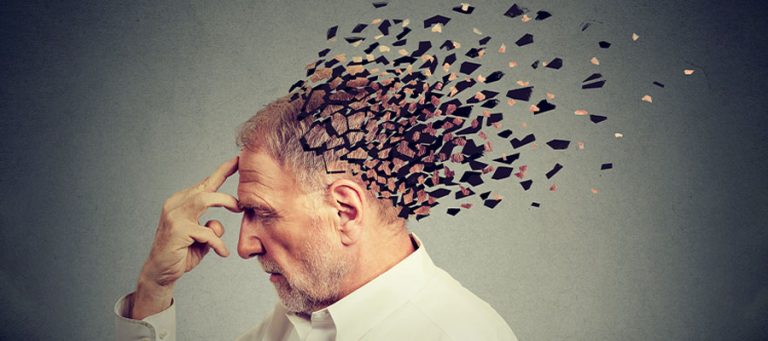
What Happens When Face Recognition Fails?
Not everyone can recognize faces normally.
A neurological condition known as prosopagnosia, commonly called “face blindness,” causes severe difficulty recognizing familiar faces.
People with prosopagnosia may have normal vision and intelligence but struggle to identify friends, relatives, or even themselves in photographs.
Some individuals compensate by using other clues, such as:
- Voice
- Hairstyle
- Clothing
- Walking style
- Body shape
This condition provides important evidence that facial recognition is a specialized cognitive ability rather than simply a normal consequence of vision.
Can Someone Be Extremely Good at Recognizing Faces?
Yes.
Some people appear to have extraordinary facial recognition abilities. These individuals are sometimes referred to as super-recognizers.
Super-recognizers can identify people from faces with remarkable accuracy, sometimes even after seeing a face only briefly or after many years.
Researchers study these individuals to better understand how the brain represents facial identity and why facial recognition abilities vary so much between people.
Why Do We Sometimes Forget a Familiar Face?
Facial recognition is powerful, but it is not perfect.
We may fail to recognize someone when:
- We meet them in an unexpected place.
- Their appearance has changed significantly.
- Lighting is poor.
- We are distracted.
- We have not seen them for many years.
This happens because recognition depends on both visual information and contextual expectations.
The brain does not simply ask, “Have I seen this face before?”
It also asks:
“Does this face make sense in the situation I’m currently in?”
Faces and Emotions
Recognizing a person’s identity is only one part of facial processing.
The brain also extracts emotional information from faces.
A raised eyebrow, smile, frown, or widened eye can communicate important social information without a single word being spoken.
The amygdala and other regions involved in emotional processing interact with the facial perception network to help us interpret these signals.
This makes facial recognition an important component of human communication.
Conclusion
The ability to recognize a face may seem simple, but it requires the coordinated activity of multiple brain systems.
From the initial processing of visual information to the identification of individual features, recognition of identity, retrieval of memories, and interpretation of emotions, facial perception is a remarkably complex neurological process.
The study of facial recognition has also given scientists valuable insights into memory, perception, social cognition, and neurological disorders such as prosopagnosia.
Every time you recognize a familiar face in a crowded room, your brain is performing an extraordinary computation—one that happens so quickly and effortlessly that we rarely notice it at all.
The next time you look at someone’s face, remember: you are not simply seeing a face. Your brain is identifying a person, connecting memories, interpreting emotions, and extracting social information—all within moments.