“Great Job!”… But Did They Really Mean It?
Imagine you accidentally spill coffee on your laptop.
Your friend looks at the mess and says:
“Well, that was a brilliant move.”
At first glance, the sentence sounds like a compliment.
But you immediately understand that your friend actually means the opposite.
How?
The words themselves don’t contain the true meaning. Instead, your brain combines tone of voice, facial expressions, context, and previous knowledge to interpret the speaker’s real intention.
This remarkable ability is one of the most sophisticated functions of the human brain.
What Are Sarcasm and Irony?
Although the two terms are often used interchangeably, they are not exactly the same.
Irony occurs when the intended meaning differs from the literal meaning.
For example, saying:
“What beautiful weather!”
during a thunderstorm is an example of verbal irony.
Sarcasm is a form of verbal irony that usually carries a humorous, critical, or mocking intention.
Understanding both requires far more than simply knowing the meaning of individual words.
Why Is Sarcasm Difficult for Computers?
If someone says,
“Fantastic! Another traffic jam.”
Most people immediately recognize the sarcasm.
A computer, however, might interpret the sentence literally and assume the speaker is happy.
This is because sarcasm depends heavily on context rather than vocabulary alone.
Even today’s advanced artificial intelligence systems sometimes struggle to recognize sarcasm because language is only one piece of the puzzle.
Humans naturally combine linguistic information with social knowledge, emotions, and real-world experience.
The Brain Doesn’t Process Words Alone
When someone speaks, your brain processes multiple sources of information simultaneously.
It considers:
- The literal meaning of the words
- Tone of voice
- Facial expressions
- Body language
- Previous conversations
- Social relationships
- The surrounding situation
Only after integrating all these signals does the brain determine what the speaker truly means.
This entire process often happens within milliseconds.
The Right Hemisphere Plays an Important Role
Although language production is usually associated with the left hemisphere, understanding sarcasm and irony often depends heavily on the right hemisphere.
The right hemisphere is particularly important for processing:
- Emotional tone
- Prosody (speech melody and intonation)
- Humor
- Figurative language
- Non-literal meanings
- Social context
Damage to certain right-hemisphere regions may leave a person able to understand the literal meaning of sentences while missing the intended sarcastic message.
Theory of Mind: Understanding Other People’s Minds
One of the most important cognitive abilities involved in sarcasm comprehension is Theory of Mind.
Theory of Mind refers to our ability to understand that other people have their own:
- Thoughts
- Beliefs
- Feelings
- Intentions
- Knowledge
When someone speaks sarcastically, your brain asks an important question:
“What does this person really intend me to understand?”
Answering this question requires looking beyond the words themselves.
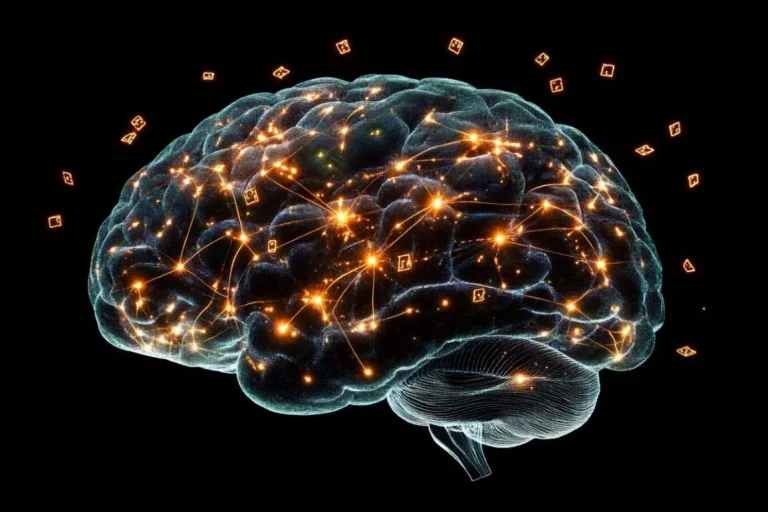
The Brain Regions Involved
Several brain regions work together to interpret sarcasm.
Prefrontal Cortex
The prefrontal cortex helps evaluate context, make decisions, and suppress literal interpretations when necessary.
Right Temporal Lobe
This region contributes to understanding social meaning, emotional communication, and non-literal language.
Temporoparietal Junction (TPJ)
The temporoparietal junction plays a key role in Theory of Mind.
It helps us infer what other people know, believe, or intend.
Amygdala
The amygdala processes emotional information, allowing us to detect whether a sarcastic statement is playful, friendly, or hostile.
Together, these regions enable us to understand not only what someone says but why they say it.
Why Do Some People Struggle with Sarcasm?
Understanding sarcasm is surprisingly demanding.
It requires language processing, emotional recognition, attention, memory, and social reasoning all at the same time.
People with certain neurological or developmental conditions may find sarcasm particularly challenging.
For example, some individuals with Autism Spectrum Disorder (ASD) may interpret language more literally and have difficulty identifying indirect meanings or hidden intentions.
Similarly, people with damage to specific brain regions may lose the ability to recognize sarcasm even though their vocabulary and grammar remain intact.
Can Children Understand Sarcasm?
Young children usually interpret language literally.
As their brains mature and their Theory of Mind develops, they gradually become better at recognizing irony and sarcasm.
Most children begin understanding simple sarcasm during middle childhood, although this ability continues improving throughout adolescence.
The development of social experience is just as important as language ability.
Why Do Humans Use Sarcasm?
If sarcasm is so complicated, why do people use it?
Sarcasm serves many social purposes.
People use it to:
- Express humor
- Reduce tension
- Criticize indirectly
- Strengthen friendships
- Signal shared understanding
- Avoid direct confrontation
When used appropriately, sarcasm can enrich communication by conveying emotions that literal language cannot easily express.
What Does Sarcasm Teach Us About Language?
Sarcasm reveals an important truth about human communication:
Language is much more than words.
Meaning emerges from the interaction between vocabulary, context, emotion, culture, and social understanding.
This is one reason why neurolinguistics extends beyond grammar and pronunciation—it explores how the brain transforms simple sounds into meaningful human communication.
Conclusion
Understanding sarcasm is one of the most impressive achievements of the human brain. Every sarcastic remark requires the brain to combine language, emotion, memory, attention, and social reasoning in a matter of milliseconds.
Rather than interpreting words in isolation, the brain continuously asks deeper questions: What does the speaker mean? What is their intention? How does the context change the message?
The next time someone says, “Fantastic!” after something goes completely wrong, remember that your brain is performing an extraordinary act of interpretation—one that remains a fascinating subject of research in neurolinguistics and cognitive neuroscience.