Have You Ever Studied Vocabulary at Night and Remembered It Better the Next Day?
Imagine spending an hour learning new vocabulary before going to bed. The next morning, you can recall many of those words more easily than you expected.
Coincidence?
Probably not.
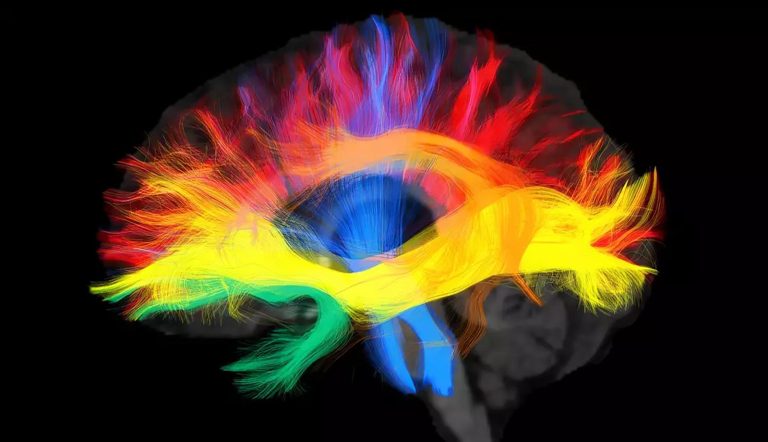
Neuroscience has shown that sleep is far more than a period of rest. While we sleep, our brains remain remarkably active, strengthening memories, organizing information, and preparing us to learn even more the following day.
For language learners, sleep is not time lost—it is an essential part of the learning process.
The Brain Never Truly Sleeps
Although our bodies appear to be resting, the brain continues working throughout the night.
During sleep, billions of neurons communicate with one another, replaying and reorganizing experiences from the day. This process helps determine which memories should be strengthened and which can be discarded.
Scientists call this process memory consolidation.
Without sufficient sleep, many of the words, grammar rules, and expressions learned during the day may never become stable long-term memories.
From Short-Term Memory to Long-Term Memory
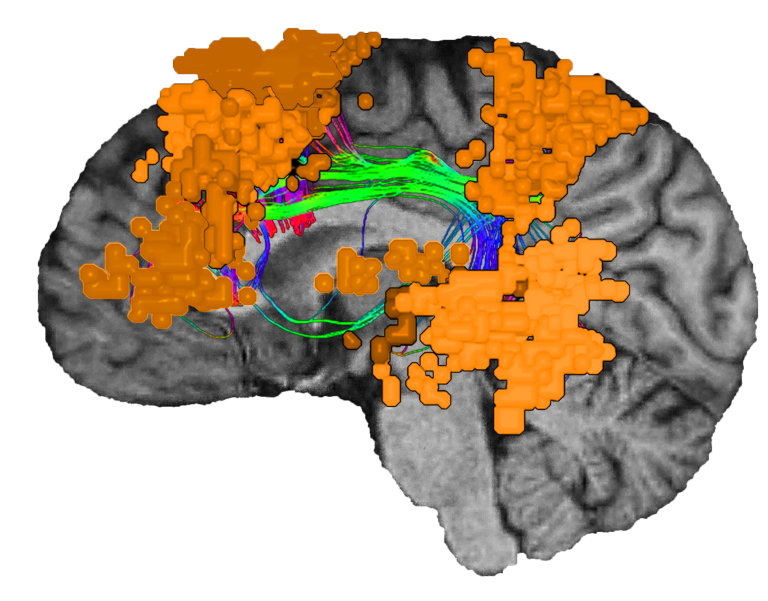
When you first learn a new word, it is temporarily stored in working memory and the hippocampus, a brain structure critical for forming new memories.
However, these temporary memories are fragile.
During sleep, especially during deep sleep, the brain gradually transfers important information into long-term storage across the cerebral cortex.
This process makes vocabulary easier to retrieve in future conversations.
In other words, learning does not end when you close your textbook—it continues while you sleep.
Sleep Helps You Learn Vocabulary
Vocabulary learning depends heavily on memory.
Research has shown that people who sleep after studying generally remember more words than those who stay awake for long periods afterward.
During sleep, recently learned vocabulary is repeatedly reactivated by the brain, strengthening the neural connections that represent each word.
This is one reason why reviewing vocabulary before bedtime can be an effective study strategy.
Sleep Strengthens Grammar Learning
Learning grammar involves recognizing patterns rather than simply memorizing individual facts.
Studies suggest that sleep helps the brain detect relationships between words and grammatical structures.
After a good night’s sleep, learners often become better at recognizing grammatical rules—even when they cannot consciously explain how they learned them.
The brain continues analyzing language patterns while we sleep.
The Role of REM Sleep
Sleep consists of several stages, each serving different functions.
One of the most fascinating stages is Rapid Eye Movement (REM) sleep, during which the brain becomes highly active and most dreaming occurs.
Researchers believe REM sleep contributes to:
- Integrating new information with existing knowledge
- Strengthening emotional memories
- Enhancing creativity
- Improving problem-solving
- Supporting language learning
Some studies suggest that REM sleep helps connect newly learned words with concepts already stored in long-term memory, making vocabulary more meaningful and easier to access.
Deep Sleep and Memory Consolidation
Another important stage is slow-wave sleep (SWS), often called deep sleep.
During this stage, the brain repeatedly “replays” newly learned information.
This replay strengthens neural pathways and stabilizes memories before they are integrated into long-term storage.
Deep sleep is particularly important for remembering vocabulary, factual information, and declarative knowledge.
Without enough deep sleep, learning becomes less efficient.
Can You Learn a Language While Sleeping?
This idea has fascinated people for decades.
Some products claim that simply listening to language recordings during sleep can teach you a new language.
Unfortunately, scientific evidence does not support this claim.
Sleeping alone cannot teach you vocabulary or grammar that you have never encountered before.
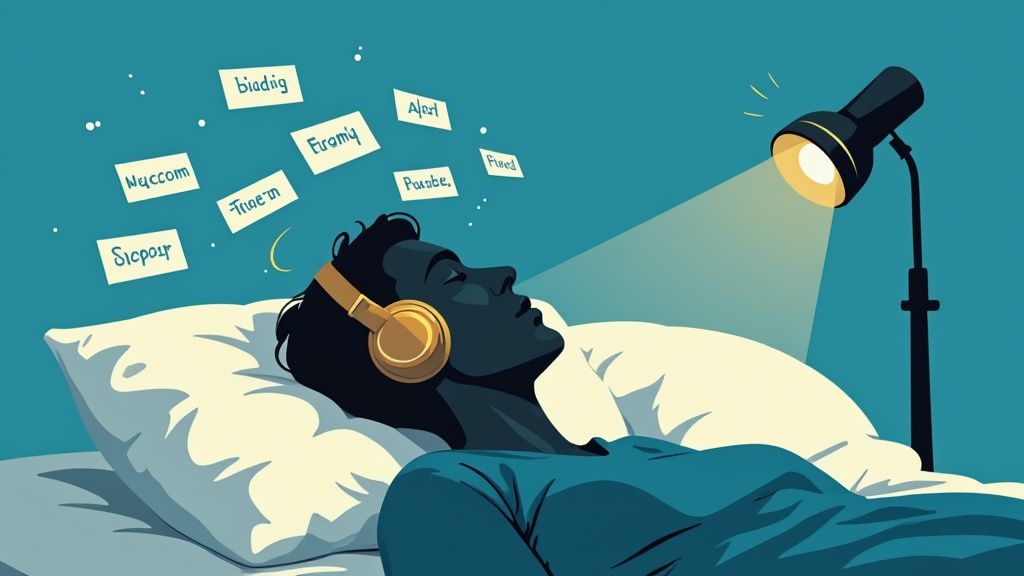
However, recent studies suggest that subtle auditory cues presented during sleep may strengthen memories that were already learned while awake.
In other words, sleep may help reinforce existing knowledge—but it cannot replace active learning.
What Happens When You Don’t Get Enough Sleep?
Sleep deprivation affects almost every cognitive function involved in language learning.
Lack of sleep can reduce:
- Attention
- Concentration
- Working memory
- Decision-making
- Learning speed
- Verbal fluency
Even one night of poor sleep can make it significantly harder to remember new vocabulary or understand complex sentences.
Chronic sleep deprivation has even greater effects on learning and cognitive performance.
How Language Learners Can Use Sleep to Their Advantage
Neuroscience offers several practical strategies.
To improve language learning:
- Study important vocabulary shortly before bedtime.
- Aim for 7–9 hours of quality sleep each night.
- Review difficult material more than once.
- Avoid all-night study sessions.
- Maintain a regular sleep schedule.
- Combine consistent practice with adequate rest.
Remember that learning happens both while you study and while you sleep.
Sleep, Neuroplasticity, and the Learning Brain
One of the most remarkable discoveries in neuroscience is that sleep supports neuroplasticity—the brain’s ability to reorganize itself by forming and strengthening neural connections.
Every new language learned changes the brain.
Sleep provides the opportunity for those changes to become stable and long-lasting.
Without sleep, many of the neural modifications created during learning remain incomplete.
Conclusion
Language learning is not limited to classrooms, textbooks, or conversations. Some of the most important learning occurs when your eyes are closed and your brain appears to be resting.
During sleep, the brain strengthens vocabulary, consolidates grammar, reorganizes neural networks, and transforms short-term experiences into lasting knowledge.
The next time you finish studying a new language, remember that your learning journey is not over. While you sleep, your brain continues the lesson—quietly building stronger memories, deeper understanding, and a more powerful language system.
For anyone learning a second language, sleep is not a luxury.
It is one of the brain’s most powerful learning tools.