What Happens Inside a Bilingual Brain?
Imagine a bilingual speaker having a conversation in English. Although they are speaking only one language, is their native language completely “turned off”?
For decades, many scientists believed that bilinguals simply switched one language on while switching the other off. However, modern research in neurolinguistics and cognitive neuroscience has revealed a far more fascinating picture.
The bilingual brain does not simply alternate between languages. Instead, it often activates multiple language systems simultaneously, constantly selecting the appropriate words while suppressing competing alternatives.
Are Both Languages Active at the Same Time?
One of the most important discoveries in bilingualism research is the concept of parallel language activation.
Studies have shown that when bilingual individuals read, listen, or speak in one language, words from their other language may also become active—even if they are completely unaware of it.
For example, a Persian-English bilingual reading the English word book may unconsciously activate related concepts and lexical representations from Persian as well.
This process happens within milliseconds and demonstrates that the bilingual brain continuously processes information from more than one language.
How Does the Brain Choose the Right Language?
If multiple languages are active simultaneously, why don’t bilingual speakers constantly mix them up?
The answer lies in the brain’s powerful executive control system.
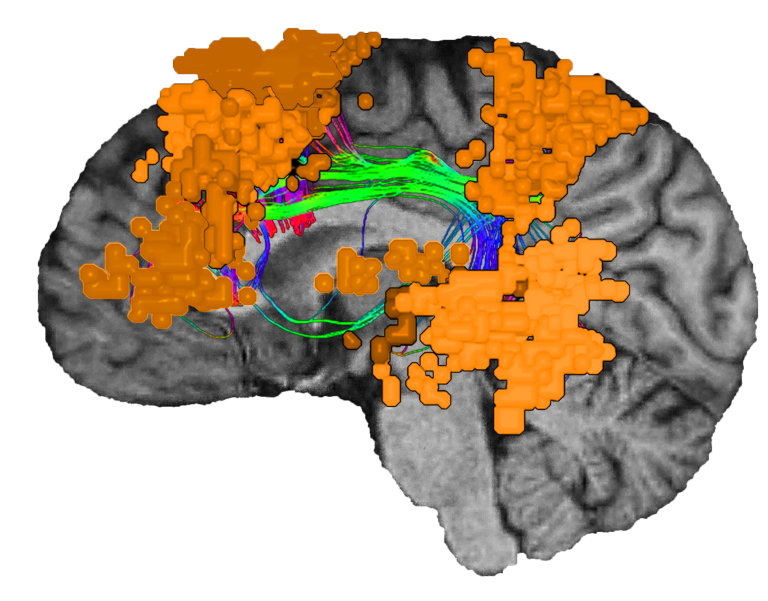
Several brain regions work together to ensure that the intended language is selected while competing languages are temporarily inhibited.
This system allows bilingual speakers to:
- Select the appropriate language
- Suppress irrelevant words
- Maintain fluent speech
- Switch languages when necessary
- Resolve competition between similar expressions
Remarkably, all of this happens automatically and almost instantly.
The Brain Regions Behind Language Control
Neuroscientists have identified several brain areas involved in managing multiple languages.
Prefrontal Cortex
The prefrontal cortex plays a central role in attention, planning, decision-making, and cognitive control. During bilingual communication, it helps select the target language and inhibit competing alternatives.
Anterior Cingulate Cortex (ACC)
The anterior cingulate cortex acts as a conflict monitor.
Whenever two languages compete for selection, the ACC detects the conflict and helps the brain resolve it efficiently.
Basal Ganglia
The basal ganglia contribute to selecting appropriate motor and linguistic responses. They help coordinate smooth language production and support rapid language switching.
Together, these regions form a sophisticated control network that enables bilingual communication.
What Is Code-Switching?
Many bilinguals naturally switch between languages during conversations. This phenomenon is known as code-switching.
For example, someone might begin a sentence in Persian and finish it in English, depending on the topic, audience, or context.
Contrary to popular belief, code-switching is not a sign of confusion or poor language ability.
In fact, research suggests that it often reflects advanced bilingual competence. Skilled bilingual speakers know when and how to switch languages efficiently while maintaining clear communication.
For many multilingual communities, code-switching is a normal and highly functional part of everyday conversation.
Does the Brain Store Languages Separately?
Early theories suggested that each language occupied completely separate regions of the brain.
Today, evidence indicates that this view is overly simplistic.
Instead, different languages share many of the same neural networks while maintaining partially distinct representations. Vocabulary, grammar, pronunciation, and meaning are processed by interconnected brain systems rather than isolated “language centers.”
This overlapping organization explains why learning one language can sometimes influence another—both positively and negatively.
Is There a Limit to How Many Languages the Brain Can Learn?
One of the most common questions in neurolinguistics is whether the brain has a maximum language capacity.
Current evidence suggests that there is no fixed limit.
Polyglots—people who speak many languages—demonstrate the extraordinary flexibility of the human brain. While learning additional languages becomes increasingly demanding, the brain remains capable of acquiring new linguistic systems throughout life.
The key factor is not the brain’s capacity, but continued exposure and regular use.
Does Managing Multiple Languages Benefit the Brain?
Researchers have investigated whether bilingualism strengthens certain cognitive abilities.
Although findings continue to be debated, many studies suggest that bilingual individuals may show advantages in areas such as:
- Selective attention
- Cognitive flexibility
- Task switching
- Inhibitory control
- Monitoring competing information
These potential benefits are thought to arise because bilingual speakers constantly practice controlling multiple active language systems.
However, scientists also emphasize that these effects vary across individuals and depend on factors such as proficiency, age of acquisition, and daily language use.
The Bilingual Brain: A Masterpiece of Neural Coordination
Every conversation a bilingual person has is a remarkable demonstration of neural efficiency.
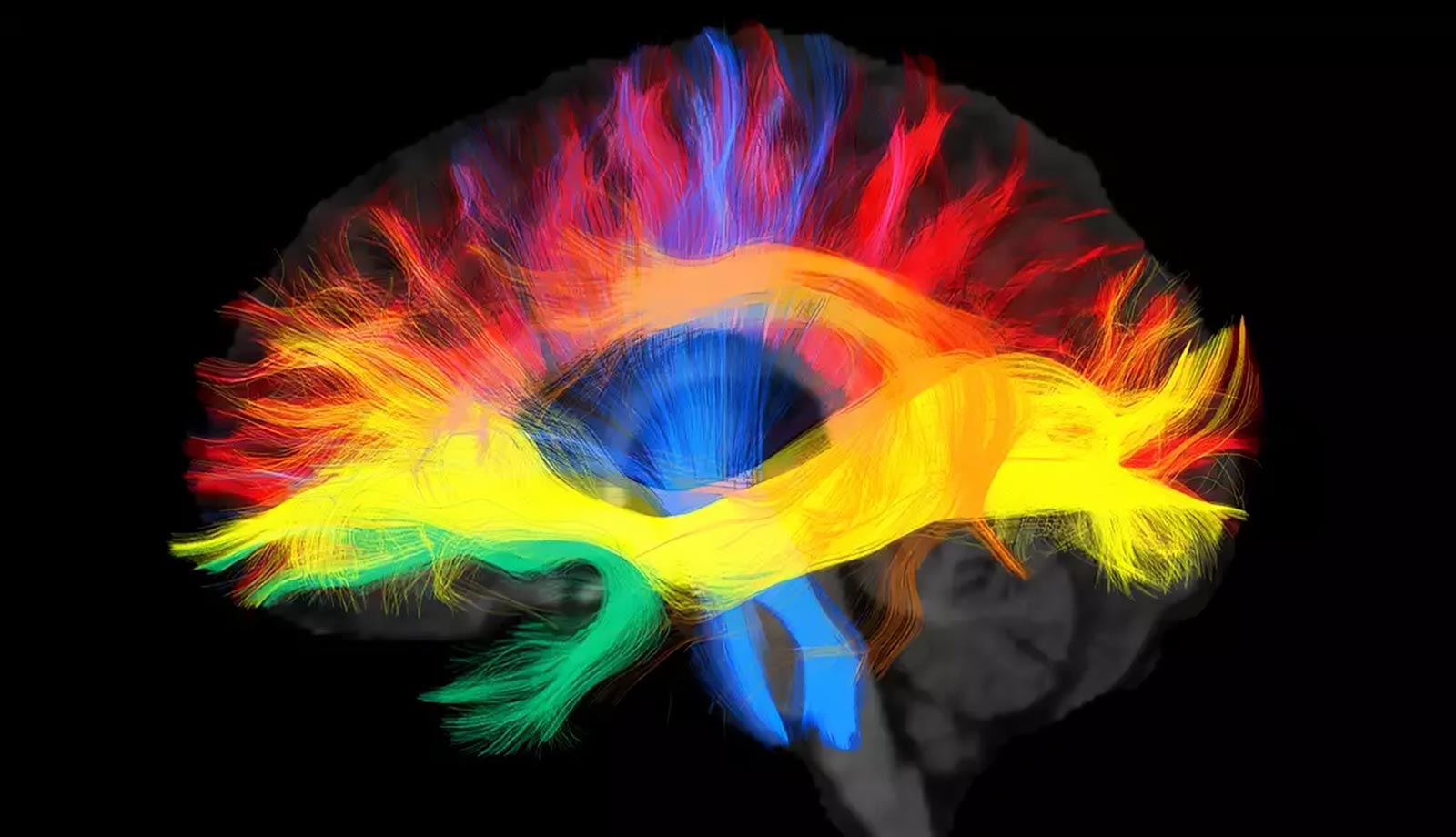
Within fractions of a second, the brain activates multiple languages, evaluates competing words, suppresses irrelevant alternatives, selects the appropriate expressions, and coordinates speech production—all without conscious effort.
This extraordinary level of coordination highlights one of the defining features of the human brain: its ability to adapt, organize, and manage immense complexity with incredible speed.
Conclusion
Modern neuroscience has transformed our understanding of bilingualism. Rather than treating languages as isolated systems, the brain processes them as interconnected networks that often remain active simultaneously.
Managing multiple languages requires sophisticated cooperation between attention, memory, executive control, and language-processing systems. This dynamic interaction not only allows bilingual individuals to communicate effectively but also provides valuable insights into how the human brain organizes one of its most remarkable abilities—language.
As research in neurolinguistics continues to evolve, the bilingual brain remains one of the most fascinating windows into the extraordinary flexibility and adaptability of the human mind.